
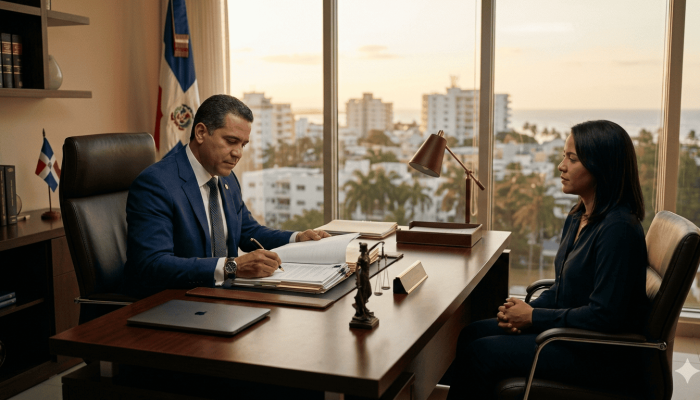
Yes, you may be able to get divorced in the Dominican Republic even if you do not know where your spouse is. Learn how the process works and what legal steps are required.
One of the most difficult situations after a separation is wanting to move forward with a divorce but not knowing where your spouse is.
Perhaps your spouse no longer responds. Perhaps they moved away, changed their contact information, or simply disappeared from your life. In many cases, the other person may refuse to cooperate, sign documents, or attend any legal proceeding.
This raises an important question:
Can you still get divorced in the Dominican Republic if you do not know where your spouse is?
The answer is yes. In the Dominican Republic, it may be possible to obtain a divorce even when your spouse’s whereabouts are unknown.
However, this type of case must be handled carefully. The process is not automatic, and it must comply with strict legal requirements, especially regarding notification and jurisdiction.
Divorce Without Your Spouse’s CooperationMany people believe that a divorce cannot move forward unless both spouses agree or sign the necessary documents. That is not always the case.
In the Dominican Republic, a divorce for a specific cause may allow one spouse to initiate the process even if the other spouse:
• does not agree to the divorce
• refuses to respond
• cannot be located
• does not attend court hearings
• does not cooperate with the process
In other words, your spouse’s lack of cooperation does not necessarily prevent you from seeking a divorce.
That said, the court must be satisfied that the legal process has been followed correctly. This is especially important when the other spouse is not personally available to receive notice.
What Happens If You Do Not Know Your Spouse’s Address?
When the address of the other spouse is unknown, Dominican law allows the process to continue through a special form of notification.
This is commonly referred to as notification or service of notice to an unknown domicile.
This step is essential. If the notification is not handled properly, the divorce process may later be challenged or even invalidated.
That is why these cases require careful legal preparation from the beginning. It is not enough to simply file the case. The attorney must make sure that each procedural step is completed in the correct form and within the required timelines.
Who Can File for This Type of Divorce in the Dominican Republic?
Not every case can be filed in the Dominican Republic.
Before starting the process, it is important to determine whether the Dominican courts have jurisdiction. This depends on the specific facts of the case.
There may be a valid basis to file for divorce in the Dominican Republic if:
• at least one spouse is Dominican
• the marriage was celebrated in the Dominican Republic
• one of the spouses has legal residency in the Dominican Republic
• there is another legally recognized connection to the country
On the other hand, if neither spouse has any legal connection to the Dominican Republic, and the marriage did not take place in the country, the case may not be eligible to proceed before Dominican courts.
Each situation must be reviewed individually before deciding the best legal strategy.
How Long Does the Process Take?
The timeline depends on several factors, including the court, the complexity of the case, and whether notifications must be made inside or outside the Dominican Republic.
In general, this type of divorce may take several months.
If the other spouse is abroad, or if additional notification procedures are required, the process may take longer. International notifications, mandatory waiting periods, and court scheduling can all affect the timeframe.
For this reason, it is important to begin the process with realistic expectations and proper legal guidance.
Do You Need to Travel to the Dominican Republic?
In many cases, you may not need to be physically present in the Dominican Republic for the entire process.
Depending on the circumstances, your attorney may be able to represent you through a power of attorney. This can be especially helpful if you live abroad, cannot travel, or want to avoid unnecessary delays.
However, the exact requirements depend on the facts of your case and the documents available. A legal review is necessary before confirming whether your presence will be required.
A Common Mistake That Can Put the Divorce at Risk
One of the biggest mistakes in these cases is assuming that the divorce is simple just because the other spouse cannot be found.
In reality, cases involving an unknown address must be handled with precision.
If the notification is defective, if the court lacks jurisdiction, or if the required legal steps are not completed correctly, the divorce may later be challenged. This can create serious problems, especially if you plan to remarry, resolve property matters, or use the divorce judgment abroad.
The goal is not only to obtain a divorce judgment. The goal is to obtain a divorce that is legally valid and difficult to challenge later.
What Happens After the Divorce?
A divorce legally ends the marriage, but it does not automatically resolve every related issue.
Depending on your situation, there may still be additional matters to address, such as:
• division of jointly owned property
• child custody
• child support
• recognition of the divorce in another country
• registration or legalization of documents
• immigration or consular use of the divorce judgment
These issues may require separate legal steps. That is why it is important to evaluate the entire situation, not just the divorce itself.

The Most Important Question
The real question is not only whether you can get divorced without knowing where your spouse is.
The more important question is whether the process is being handled correctly from the very beginning.
A divorce involving an absent or unreachable spouse requires legal strategy, proper documentation, and strict compliance with Dominican procedural rules.
Handled correctly, it may allow you to move forward with your life. Handled incorrectly, it may create delays, additional expenses, or future legal complications.
Legal Assistance in the Dominican Republic
At Santana Ripoll & Associates, we assist clients with divorce proceedings in the Dominican Republic, including cases where one spouse’s whereabouts are unknown.
Our team evaluates each case carefully to determine jurisdiction, documentation requirements, notification procedures, and the most effective legal strategy.
We assist clients in Puerto Plata, throughout the Dominican Republic, and abroad through both in-person and virtual legal services.
If you want to know whether you can file for divorce in the Dominican Republic, contact us for a personalized consultation.
Call to action
Need legal assistance with a divorce in the Dominican Republic?
Contact Santana Ripoll & Associates today to evaluate your case and determine the next legal steps.
Website: www.santanaripoll.com